Best Lightweight Travel Car Seats for Flights and Road Trips (2026)
Plenty of everyday convertible car seats weigh close to 20 pounds or more. That is fine when it lives in the back of your car. It is a lot less fine when you are carrying it through Terminal B with a backpack on, a toddler on your hip, and a boarding pass in your teeth.
A lightweight travel car seat fixes that. The best ones weigh 8 to 10 pounds, carry the label that says they are certified for aircraft, and fit in a coach seat without a wrestling match. I went through the FAA's rules, manufacturer specs, car seat tech reviews, and retailer listings to narrow it down to six seats and two accessories, split by your kid's age and how you travel.
Quick verdict: for most babies and toddlers, the Evenflo Tribute LX is the best lightweight travel car seat for the money. For kids 2 and up who fly a lot, the WAYB Pico is the one to save for.
Lightweight Travel Car Seats Compared
Weights and widths come from manufacturer listings and published car seat reviews. Limits change with manufacture date, so always go by the label on the seat in your hands.
| Seat | Type | Seat Weight | Width | Child Limits | Price | Use on a Plane? |
|---|---|---|---|---|---|---|
| Evenflo Tribute LX | Convertible | ~9 lbs | ~18.5 in | 5 to 40 lbs | $99.99 | Yes |
| Graco Contender Slim | Convertible | ~16 lbs | ~19 in | 5 to 65 lbs | $189.99 | Yes |
| WAYB Pico | Forward-facing | 8 lbs | 14.75 in | Age 2+, up to 50 lbs | $619.00 | Yes |
| Doona | Infant seat + stroller | ~17 lbs | ~17.5 in | 4 to 35 lbs | $550.00 | Yes, without base |
| BubbleBum | Backless booster | Inflatable | Narrow | 40 to 110 lbs | $39.99 | No |
| mifold Comfort | Backless booster | Pocket size | Narrow | 40 to 100 lbs | $74.95 | No |
Prices as of Nov 6, 2026, 1:02 PM UTC. Product prices and availability are accurate as of the date/time indicated and are subject to change. Any price and availability information displayed on Amazon.com at the time of purchase will apply to the purchase of this product.
What Makes a Car Seat FAA Approved?
This is the part that trips people up at the gate, so here is exactly what the FAA's Flying with Children page says.
- Look for the label. A US seat that can be used on a plane says: "This restraint is certified for use in motor vehicles and aircraft." It is usually a sticker on the side or back of the shell, often in red text. Take a photo of it before you leave home so you can show a flight attendant without flipping the seat over in the aisle.
- 16 inches is the magic width. The FAA says a seat should fit most airplane seats if it is no wider than 16 inches. Wider seats often still fit with the armrest raised, but no promises.
- Boosters are not allowed on planes. The FAA prohibits booster seats, backless seats, and baby carriers during taxi, takeoff, and landing. Your booster goes in the overhead bin or gets checked.
- Where it goes: a car seat cannot block anyone's way out, so it cannot go in an exit row, and many airlines want it in a window seat. If your seat does not fit the seat you bought, the airline has to find you another seat in the same class.
There is one more option for toddlers who are past car seats on the plane but you still want strapped in: the CARES harness. It is FAA-certified for kids 22 to 44 pounds and up to 40 inches tall, and it works with the airplane's seat belt. It is approved for aircraft only, though, so you still need a car seat when you land.
Do You Even Need a Car Seat on the Plane?
Legally, for a lap baby, no. Practically, here is how I would decide:
| Situation | Bring a Seat Onboard? | Why |
|---|---|---|
| Under 2, you bought them a seat | Yes | Safest option per the FAA, and a familiar seat helps babies nap |
| Toddler 2 to 4 who still uses a harness | Usually yes | Keeps a wiggly kid contained, and you need it in the rental car anyway |
| Booster-age kid | No | Boosters are not allowed for takeoff and landing; pack a travel booster for the car |
| Driving your own car the whole trip | N/A | Use your everyday seat. A lighter seat only helps if you carry it |
For the rest of the airport plan (security, snacks, gate-checking the stroller), our tips for flying with kids covers the whole day, door to door.
The Best Lightweight Travel Car Seats

1. Evenflo Tribute LX: Best Overall for Flying
- Seat weight: about 9 lbs
- Width: about 18.5 in at the widest point
- Rear-facing: 5 to 40 lbs, 19 to 40 in
- Forward-facing: 30 to 40 lbs, 35 to 40 in (current listing)
- Certified for aircraft use: yes, check the label on your seat
This is the seat that shows up on nearly every travel list for one reason: it weighs about 9 pounds and costs around $100. It rear-faces, it has a 5-point harness, and it carries the aircraft certification sticker. Reviews from traveling families keep landing on the same two points: it is easy to carry through an airport, and it is not a forever seat. The 40-pound cap and short shell mean a tall 3-year-old will be done with it. For a baby or young toddler who rear-faces on the plane and in the rental car, that does not matter much.
- One of the lightest harnessed convertibles you can buy
- Rear-faces from 5 lbs, so it works for babies who have outgrown a carrier
- Cheap enough that a scuff from the gate-check pile does not ruin your trip
- 40-lb harness limit, so bigger toddlers outgrow it fast
- Wider than the FAA's 16-inch rule of thumb, so a tight economy seat may need the armrest up
- Bare-bones padding

2. Graco Contender Slim: Best If You Want One Seat for Home and Travel
- Seat weight: about 16 lbs
- Width: about 19 in
- Rear-facing: 5 to 40 lbs, up to 49 in
- Forward-facing harness: 26.5 to 65 lbs, up to 49 in
- Certified for aircraft use: yes
- Expires: 7 years
This is the compromise pick. It is not light. At around 16 pounds it is almost double the Tribute LX. What you get for that is a harness that goes to 65 pounds forward-facing and a seat you could use as your everyday seat in a second car. If your trips are mostly long road trips with the occasional flight, one seat that fits your kid for years beats two seats that each half fit. Safe in the Seat notes it is not a great fit for small newborns, because the lowest harness position runs high.
- 65-lb forward-facing harness limit, so it lasts for years
- Rear-faces up to 40 lbs
- Doubles as a daily seat for a second car or the grandparents
- Heavy to carry through an airport without a cart
- 19 inches wide, so it can be a squeeze in a narrow airplane seat
- Not ideal for small newborns

3. WAYB Pico: Best Ultralight Seat for Kids 2 and Up
- Seat weight: 8 lbs
- Width: 14.75 in
- Forward-facing only, ages 2 and up
- Limits per current listing: 26.5 to 50 lbs, 33.5 to 45 in (varies by manufacture date)
- Folds; aluminum frame
- Certified for aircraft use: yes
The Pico is the seat travel-heavy parents talk about in the same tone other people use for good luggage. It weighs 8 pounds, folds small, and at 14.75 inches it is one of the few seats that fits under the FAA's 16-inch guideline with room to spare. It is forward-facing only, which means it is for kids who have truly outgrown rear-facing, not a way to flip a 2-year-old early. The price is the catch. It runs in the $600 range with its bag, and the listing warns that opened boxes cannot be returned, so read the limits before you cut the tape.
- 8 lbs and folds small enough for many overhead bins
- Narrowest seat on this list
- Great for taxis, rideshares, and rental cars at the destination
- Expensive
- Forward-facing only
- No built-in lock-off, so some international cars need a locking clip (WAYB says it provides one)

4. Doona: Best for Babies (Car Seat Plus Stroller)
- Carrier weight: about 17 lbs
- Width: about 17.5 in
- Rear-facing infant seat: 4 to 35 lbs, up to 32 in
- Certified for aircraft use without the base
- Wheels fold out, turning the seat into a stroller
The Doona solves the worst part of flying with a baby: the airport. The seat has wheels that fold out, so it is your stroller from the curb to the gate, then it goes on the plane as an infant seat in a purchased seat, then it rolls out to the rental car. It installs without the base using the seat belt, which is what you want for taxis and rentals. The downsides are real. Carseatblog measured the carrier at close to 17 pounds, which is heavy to lift into a car, and most babies outgrow it around their first birthday. Counterfeits exist, so buy from an authorized seller.
- Car seat and stroller in one, so one less thing to gate-check
- Baseless install with a lap belt or a European routing
- Certified for aircraft use
- About $550
- Heavy to lift in and out of the car
- Typically outgrown around 12 months
Best Travel Boosters for Road Trips and Rental Cars
Booster-age kids are the easy case for flying, because the booster is just luggage. Where it matters is the car on the other end. Both of these pack small enough that you will actually bring them.

5. BubbleBum: Best Road Trip and Rideshare Booster
- Inflatable backless booster
- Listing: 40 to 110 lbs, ages 4 to 11
- Deflates to about 12 x 6 x 4 in
- Uses the vehicle's 3-point seat belt
Once your kid is in a booster, the travel problem changes. You do not need a seat on the plane anymore (and you cannot use a booster there anyway, more on that below). You need something for the rental car or the Uber that does not take up half a suitcase. The BubbleBum inflates by mouth in about 20 seconds and packs into a backpack pocket. Narrow enough for three across in a lot of back seats, which matters if you are squeezing cousins into one car at Thanksgiving.
- Packs flat, weighs almost nothing
- Cheap
- Narrow, good for three across
- Backless, so it gives no head or side support for sleeping kids
- Not usable on an airplane
- Some kids fidget it out of position

6. mifold Comfort: Smallest Booster for Carpools and Trips
- Backless booster that positions the belt instead of lifting the child
- Listing: ages 4 and up, 40 to 100 lbs, 43.5 to 59 in
- Fits in a backpack or glove box
- Includes a padded seat cushion
The mifold takes a different approach. Instead of raising your kid up to the seat belt, it pulls the lap belt down to fit your kid. It is small enough to live in a glove box, which makes it the booster you actually have with you when plans change. Comfort on long drives is the usual knock on ultra-compact boosters, and this newer Comfort version adds a padded cushion for that reason. For a 30-minute rideshare it is hard to beat.
- Smallest booster you can carry
- Works well for carpools and quick rides
- No inflating
- Fussier to get the belt fit right than a regular booster
- Less comfortable than a traditional booster on long drives
- Not usable on an airplane
Car Seat Travel Gear Worth the Space

7. J.L. Childress Gate Check Bag: The $15 Insurance Policy
- Fits most car seats and infant carriers
- Drawstring closure; built-in AirTag holder (AirTag not included)
- Packs small into a diaper bag
If you are not using the seat on the plane, it is going to be thrown around a baggage cart. This bag keeps the straps from snagging on the belt loader, keeps the fabric out of the rain, and gives you a handle. It is not padded, so it protects against dirt and snags, not impact. The AirTag pocket is a nice touch when the seat goes under the plane.
- Cheap
- Keeps straps and fabric clean and dry
- AirTag pocket
- No padding
- Thin fabric can tear after many trips
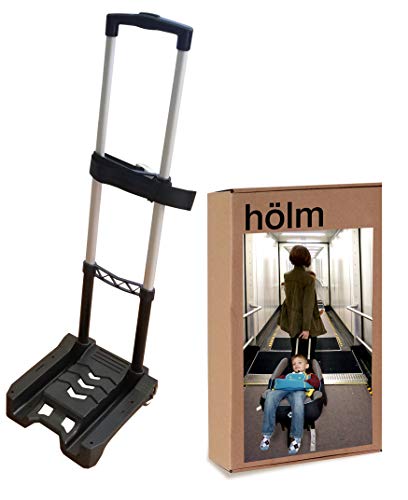
8. Holm Car Seat Travel Cart: Turns the Car Seat Into a Stroller
- Weighs about 3 lbs
- Folds to about 13 x 10 x 4 in for under-seat storage
- Straps to most car seats; listing notes it is not compatible with some Britax ISOFIX seats
A car seat cart is the trick that makes a heavier seat workable. Strap the seat on, buckle your kid in, and wheel them through the terminal and right down the jet bridge. The Holm folds small enough to go under the seat in front of you. Check the compatibility notes against your seat before you buy.
- Lets your kid ride through the airport in their own seat
- Folds small and light
- Makes a 16-lb seat feel like nothing
- Compatibility varies by seat
- One more thing to carry on the way back
Which Travel Car Seat Is Best for My Kid's Age?
| Age | Best Pick | Runner-Up |
|---|---|---|
| Newborn to about 12 months | Doona | Evenflo Tribute LX |
| 12 months to 2 years | Evenflo Tribute LX | Graco Contender Slim |
| 2 to 4 years, harnessed | WAYB Pico (if forward-facing limits are met) | Graco Contender Slim |
| 4 years and up, booster | BubbleBum | mifold Comfort |
One honest note: a 2025 update to the federal car seat standard changed forward-facing limits on newly made seats, which is why the same model can show different numbers depending on when it was built. The WAYB listing says this directly. Read the label on the seat you get, not the one in a three-year-old review.
Road Trip Tips for the Car Seat You Already Have
If you are driving, the seat matters less than the setup. Recheck the install after any rental car swap, since every car's belts and anchors are a little different. Pack a gate check bag even for road trips; it is a handy cover when you leave the seat at a hotel. And plan the entertainment before you leave the driveway. Our list of no-mess car activities for toddlers gets you through the first three hours, and a travel baby monitor handles the hotel room. If you are also trying to fit a stroller in the trunk, look at our compact strollers for small cars.
Frequently Asked Questions
What is the lightest FAA-approved car seat?
Among the seats here, the WAYB Pico is the lightest at 8 pounds, followed by the Evenflo Tribute LX at about 9 pounds. The Pico is forward-facing only and starts at age 2, so for babies and young toddlers who need to rear-face, the Tribute LX is the lightest practical choice.
How do I know if my car seat is FAA approved?
Look for a label on the seat that reads "This restraint is certified for use in motor vehicles and aircraft." It is usually a sticker on the side or back of the shell. No label means no aircraft use, even if the seat is a well-known brand.
Can I use a booster seat on an airplane?
No. The FAA prohibits booster seats and backless seats during taxi, takeoff, and landing. Carry a compact booster like a BubbleBum or mifold in your bag for the rental car, and let your kid use the airplane seat belt on the flight.
Is it better to gate-check or check a car seat?
Gate-checking is gentler, because the seat spends less time in the baggage system and you have it until you board. Either way, use a bag to protect the straps, and inspect the seat when you get it back. Using it onboard in a purchased seat is the safest option for the child and the seat.
Will a car seat fit in an airplane seat?
The FAA says a car seat no wider than 16 inches should fit most airplane seats. Many seats between 17 and 19 inches still fit with the armrest raised. If yours does not fit, the airline must move you to another seat in the same class of service.
The Short Version
- Best lightweight travel car seat overall: Evenflo Tribute LX, about 9 lbs, rear-facing from 5 lbs, certified for aircraft use.
- Best ultralight seat for kids 2 and up: WAYB Pico, 8 lbs and 14.75 inches wide, forward-facing only.
- Best for babies under 1: Doona, an infant car seat with built-in wheels, approved for aircraft use without its base, for 4 to 35 lbs.
- Best one-seat compromise: Graco Contender Slim, about 16 lbs with a 65-lb forward-facing harness limit.
- Best travel boosters: BubbleBum and mifold Comfort, for 40 lbs and up, but boosters are not allowed on planes.
- The FAA label reads "certified for use in motor vehicles and aircraft," and seats 16 inches wide or less fit most airplane seats.
Sources and Further Reading
The Bottom Line on Lightweight Travel Car Seats
The best lightweight travel car seat is the one you will actually carry. For most families with a baby or toddler, that is the Evenflo Tribute LX: about 9 pounds, certified for planes, and cheap enough to be a second seat. If your kid is 2 or older and you fly often, the WAYB Pico costs a lot more and earns it on every trip. And if your kid is in a booster, leave the big seat at home entirely. Your back will thank you somewhere around gate 34.
Affiliate + Accuracy Disclosure
As an Amazon Associate, I earn from qualifying purchases. Product specs, pricing, and availability can change. Please verify current details on Amazon before buying. Recommendations are based on published specs, owner feedback, and practical dad-focused use cases.