The Night the Baby Wouldn't Sleep and I Stopped Fighting the Clock
Last Updated: March 2026
At 1:12 a.m., I was pacing the same six feet of hallway like it was my full-time job. White noise was on. Room was dark. Diaper was fresh. Bottle offered. Burp attempted. Pacifier launched into another zip code. I had already done the entire bedtime routine twice, and my son was still glaring at me like I personally invented nighttime.
I kept checking the clock every few minutes, which made me progressively more unhinged. 1:24. 1:31. 1:39. My brain was doing the cruel math: if he sleeps now, I might get three hours. If he sleeps in twenty minutes, maybe two and a half. By 2:00 a.m., I wasn't trying to help him sleep anymore. I was trying to beat the clock, and I was losing badly.
At some point in the middle of this tiny domestic apocalypse, I caught myself whisper-yelling, "Buddy, come on, please." That's when it hit me: he wasn't broken, and I wasn't failing. We were both just fried. He was overstimulated and confused, and I was treating bedtime like a negotiation with hard deadlines. So I stopped trying to force a win.
The Moment I Changed Tactics
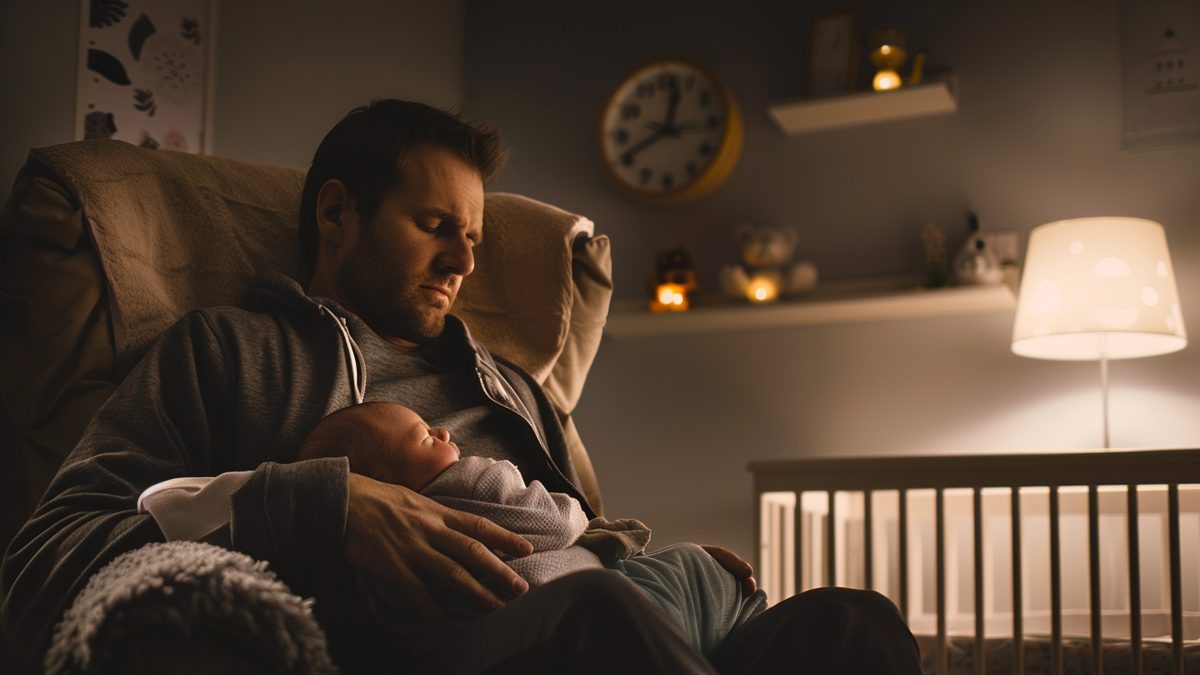
Instead of cycling through every trick I'd ever heard, I simplified everything. I turned one lamp on low, sat in the rocker, held him chest-to-chest, and slowed my breathing on purpose. No bouncing marathons. No rapid-fire fixes. Just steady pressure, quiet humming, and a pace my nervous system could actually maintain.
It didn't work instantly. He still squirmed. He still did that offended little cry babies do when sleep is clearly available but morally unacceptable. But the energy changed. I wasn't chasing sleep anymore. I was creating calm. Once I dropped the urgency, he started to soften. His body got heavier. His fists unclenched. We finally got to that floppy-baby stage around 2:47 a.m., and I remember thinking, "Okay... this is survivable."
When I laid him down, he popped one eye open, sighed like a tiny exhausted accountant, and went back out. I stood there for a full minute not moving, like I was in a movie defusing a bomb. Then I backed out of the room in absurdly slow-motion dad stealth and resisted the urge to celebrate out loud.
What That Night Taught Me
The big shift wasn't some magic sleep hack. It was accepting that on rough nights, my job is to regulate the room before I regulate the baby. If I'm frantic, he feels frantic. If I'm steady, he has something to co-regulate with. That doesn't mean every wake-up becomes easy, but it does mean we stop pouring gasoline on both of our stress levels.
Since then, I still have hard nights. Every parent does. But I don't chase the clock the same way anymore. I protect a simple sequence, keep my pace slow, and remind myself that "not sleeping yet" is not the same as "this is a disaster." That mindset alone has saved me from a lot of 2 a.m. spirals.
Bottom line: the night your baby won't sleep is usually not the night to optimize. It's the night to stabilize, stay human, and play the long game.