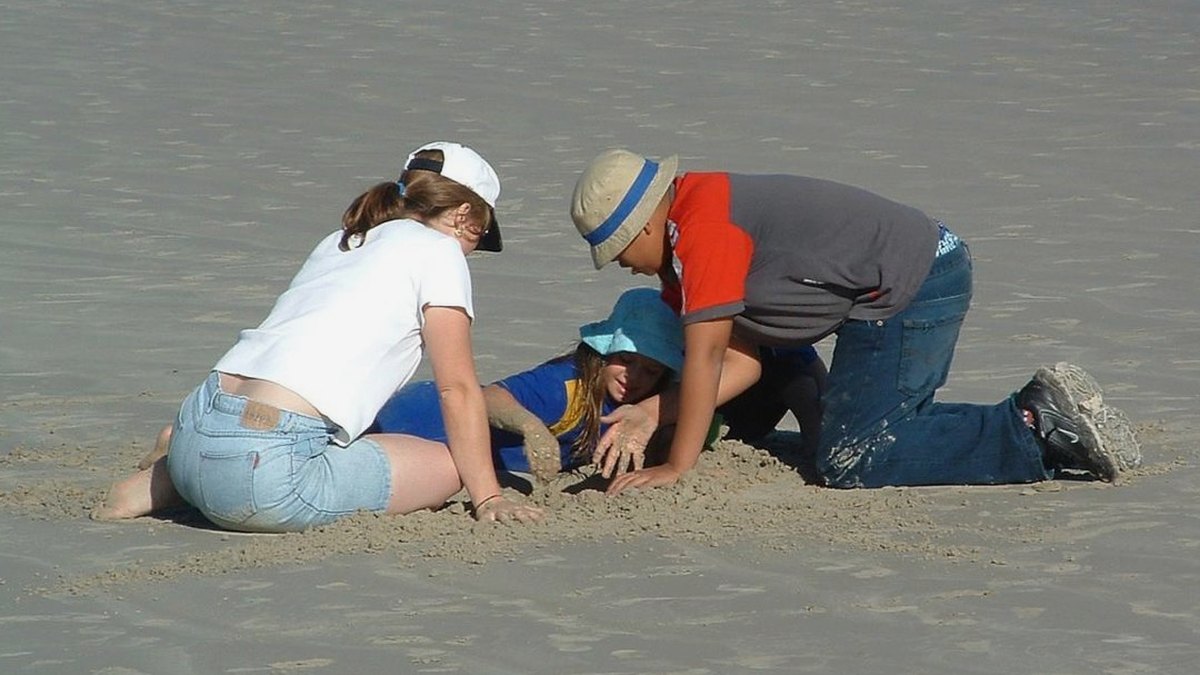
You ever spend real money on a toy-like "this better come with a college scholarship" money-only to watch your child walk past it and fall in love with a cardboard box?
Welcome to parenting, where the most cherished object in your home is a wooden spoon, and your role is to protect the remote control like it's the last artifact of a vanished civilization.
The great non-toy obsession
Kids love:
- Empty boxes
- Measuring cups
- Your keys (specifically the one key you cannot replace)
- Packaging bubbles
- The lint roller
- Any object that has a button you don't want pressed
Meanwhile, the toy you researched for two weeks sits untouched, quietly judging you.
Why this happens (it's not personal, but it feels like it)
1) Non-toys are "real"
Toys are designed for kids. Non-toys are designed for adults, which makes them feel important. Kids are trying to join the real world. They want the tools, not the practice tools. When they grab your phone, they aren't trying to ruin your life-they're trying to be you.
2) Non-toys have infinite possibilities
A toy with one function can be boring. A cardboard box can be a spaceship, a fort, a race car, a restaurant, and a dragon cave before lunch. Open-ended objects invite imagination.
3) Kids are wired for sensory learning
Non-toys often feel different: metal keys, wooden utensils, plastic containers with lids that pop. These objects make sounds, have weight, and change the environment. For a developing brain, that's irresistible.
What you can do (besides accept your fate)
Create a "yes drawer"
This saved my sanity. Pick a drawer or bin in the kitchen and fill it with safe, washable non-toys: silicone spatulas, plastic cups, wooden spoons, large measuring cups, a whisk, and a few containers with screw-top lids.
When your kid wants the forbidden objects, redirect them to the yes drawer. Not in a dramatic way-just casually: "You can play with these." Over time, they learn what's allowed.
Use real objects, but remove the danger
Kids can "help" with cooking using kid-safe tools. Search: toddler kitchen tool set. The point isn't to turn your kid into a sous-chef. The point is to give them something meaningful so they're less interested in the knife block.
Rotate toys like you're running a subscription service
Kids don't need more toys; they need fewer toys at a time. Put most toys away and rotate weekly. The same toy becomes "new" again without spending money. Your living room will feel less like a toy store exploded.
Dad hack: A couple of large boxes and a roll of painter's tape can create an hour of play. Search: painter's tape.
But what about all the toys I already bought?
First, take a breath. Buying toys is part of the job. You're trying to provide enrichment. That's good. But kids' brains don't value cost; they value engagement.
Try this: instead of offering a toy like a product, offer it like a story. "This truck is going to the moon. It needs a driver." Kids often need you to model play for thirty seconds before they take over.
Is it okay to let them play with "adult" stuff?
Within reason, yes. In fact, it can be great for development-fine motor skills, problem solving, creativity. The key is supervision and safety. Keep these out of reach:
- Batteries (especially button batteries)
- Small magnets
- Sharp tools
- Medication
- Anything with choking hazards
If you want to childproof the non-toy zones, it's worth having basic gear: cabinet locks and outlet covers.
The deeper truth: your kid wants connection
Often, "non-toy obsession" is really "I want to do what you're doing." If you're cooking, they want the spatula. If you're on your laptop, they want the keyboard. It's not about the object-it's about participation.
So the next time your kid ignores the toy you lovingly selected and chooses an empty water bottle instead, try not to take it personally. Your kid isn't rejecting your effort. They're exploring the world the way kids are designed to: hands first, logic later.
And yes, the box will become the favorite. Accept it. In five years you'll step on that expensive toy in the dark and mutter a different grown-up word anyway.
How to choose toys they'll actually use
If you want to buy fewer toys that gather dust, look for open-ended stuff that behaves like a non-toy: blocks, magnetic tiles, pretend food, dolls/action figures, simple vehicles, and art supplies. The best toys invite your kid to bring the story; they don't force a story on them.
Also: ignore age labels a little and watch your kid. Some kids want to stack. Some want to pretend. Some want to run laps while holding a spoon like it's a microphone. Buy for the pattern, not the marketing.
Set boundaries without a power struggle
It's okay to protect the remote, your laptop, and anything that can break or cause injury. The trick is to make the boundary boring: "That's not for playing. Here's what you can play with." Repeat it like a robot. The more emotional energy you add, the more interesting the forbidden object becomes.
Affiliate disclosure: This site contains affiliate links. As an Amazon Associate I earn from qualifying purchases at no extra cost to you.